Wireless Headset Technology 2026: Audio Codecs and Connection Stability
How modern wireless standards and codec innovations are reshaping professional and consumer audio.
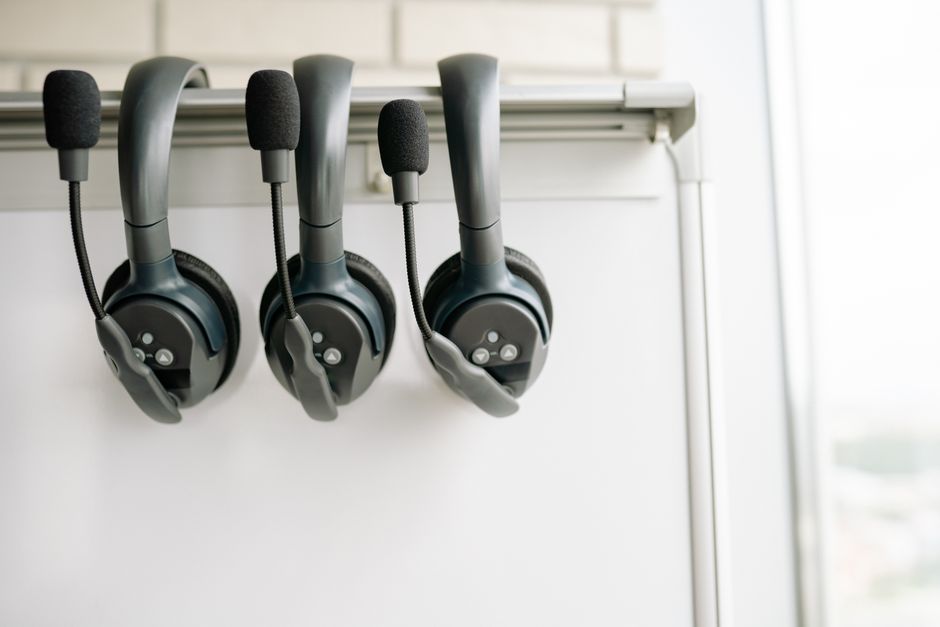
Wireless headset technology has matured far beyond convenience. Today's devices balance latency, battery life, audio fidelity, and interference resilience in ways that would have seemed impossible five years ago.
The shift from Bluetooth 4.0 and 5.0 toward 5.3 and 5.4, combined with codec refinements like LDAC and aptX Adaptive, has opened new possibilities for both enterprise and consumer markets.
This article examines the technical foundations driving 2026's wireless headset landscape and what those changes mean for users and manufacturers alike.
Bluetooth Evolution and Range Improvements
Bluetooth 5.3, now standard in flagship devices, introduced mesh networking and improved interference management in crowded RF environments.
Range has expanded to 240 meters in ideal conditions, though real-world urban deployments rarely reach that threshold due to walls, metal, and competing signals.
The practical benefit is more stable connections in offices and open spaces where multiple wireless devices operate simultaneously.
Codec Landscape in 2026
Connection Stability and Professional Deployment
Enterprise demand for wireless headsets in contact centers and offices has driven adoption standards around dropout rates and reconnection speed.
Modern multi-antenna designs and frequency-hopping algorithms reduce latency-critical interruptions, though Wi-Fi 6E overlap remains a challenge in dense band-sharing scenarios.
The Audio Engineering Society has observed growing industry emphasis on measurable connection resilience metrics rather than marketing claims alone.
Manufacturers now field headsets with dual Bluetooth receivers and fallback profiles to maintain session continuity across band transitions.
Battery and Power Efficiency Trade-offs
Higher-fidelity codecs demand more compute, but faster processors and improved power management have held battery life steady around 8–12 hours for office use.
Recent designs prioritize adaptive codec switching—selecting LDAC during stationary calls and dropping to LC3 or SBC during mobility to extend runtime.
A Plantronics Headset demonstration this year highlighted firmware-driven codec negotiation, selecting the highest quality codec the connected device supports without degrading session duration.
This approach trades fixed audio quality for predictable user experience across diverse endpoint ecosystems.
Key Technical Drivers in 2026 Headset Design
1. Mesh Networking — Enterprise and multi-office deployments
Allows headsets to relay signal through peer devices, improving coverage in dead zones without additional infrastructure.
2. Dynamic Codec Switching — Cross-platform compatibility
Firmware negotiates codec in real time, balancing audio quality against battery and latency constraints per session.
3. Dual-Band Simultaneous Connectivity — Professional audio and mobile hybrid work
Headsets connect to office infrastructure and smartphone concurrently, switching or blending streams without manual intervention.
4. AI-Driven Noise Suppression — Open-office and remote environments
On-device machine-learning models identify human speech and filter ambient noise, reducing server-side processing dependencies.
The FCC and EU are tightening emission limits for sub-6 GHz devices. Headset manufacturers are shifting antenna geometry and power management to maintain performance within narrowing SAR (specific absorption rate) windows without sacrificing range.
Consumer vs. Enterprise Divergence
Consumer headsets prioritize audio signature and comfort; enterprise models emphasize connection resilience and lifecycle compatibility.
This divide is widening. Enterprise buyers now specify Bluetooth 5.3+ compatibility, codec support matrices, and firmware-update roadmaps during procurement.
Consumer releases remain focused on active noise cancellation, spatial audio, and aesthetic design—codec choice is rarely marketed directly.

The Codec and Connectivity Inflection
Wireless headset maturity in 2026 is less about breakthrough innovation and more about refinement—steadier connections, longer batteries, and smarter codec selection.
The real winners this year are manufacturers who can abstract complexity from users: letting firmware handle codec negotiation, mesh topology, and dual-band switching without visible friction.
For consumers and enterprises alike, the headset has become a thin client in a distributed audio ecosystem, with stability and cross-device compatibility outweighing raw codec bitrate.