What High-Performance Gaming Peripherals Are Actually Worth in 2026
Latency, build quality, and ergonomics separate genuine performance gains from marketing noise.
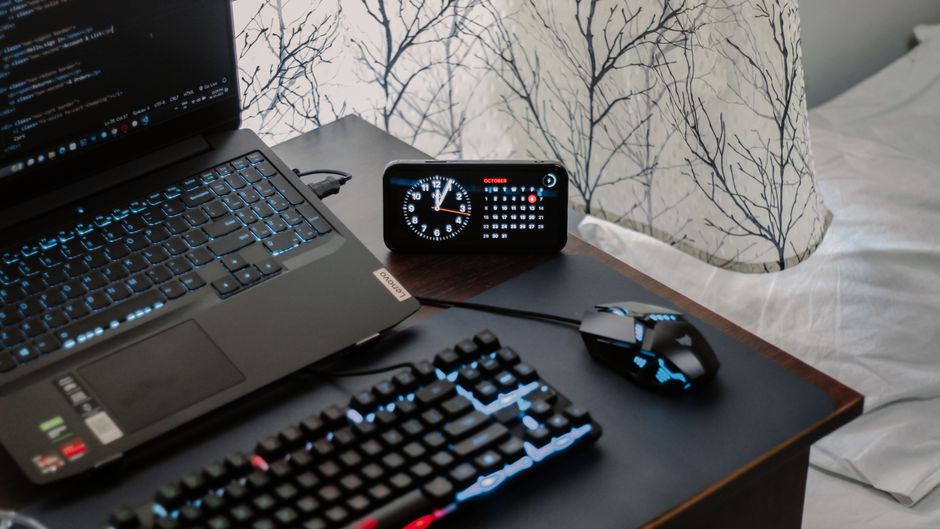
Gaming peripherals have become a category defined by hyperbole. Every keyboard claims tournament-grade responsiveness. Every mouse promises competitive advantage. But separating legitimate performance improvements from marketing theater requires understanding what actually moves the needle in real gameplay.
The peripherals market in 2026 has matured past simple RGB aesthetics. Latency measurements are measurable. Build longevity is quantifiable. And for serious players, these differences genuinely matter—but the cost-to-benefit curve gets steep fast.
Latency as a Real Variable
Gaming mouse latency now regularly hovers between 1-8 milliseconds depending on polling rate and connection method. At competitive frames-per-second rates, this window is perceptible to trained reflexes.
A computer mouse wired directly to a USB port eliminates the wireless latency penalty entirely. Wireless technologies like 2.4GHz proprietary receivers have narrowed the gap significantly, but lag remains measurable.
For casual gaming, 8ms versus 2ms is invisible. For esports-tier play in fast-twitch genres, it compounds. The delta between a 125Hz polling rate and 8000Hz is not uniform across all game types or playstyles.
Polling Rate vs. Real-World Impact
Build Quality and Longevity Matter More Than Marketing Claims
A mechanical keyboard rated for 50 million keystrokes will last longer than one rated for 20 million. A mouse with a proven encoder design resists drift longer than an untested switch.
Budget peripherals often fail within 18 months. Mid-tier options last 3-5 years with regular use. Premium builds with quality switches and reinforced cable connectors regularly exceed 5 years. This is where cost-per-hour-of-gameplay begins to favor higher-end options.
TechRadar's gaming coverage regularly documents reliability patterns across product generations. Consistency in materials—not just peak performance—separates peripheral lines that endure from those that become e-waste.
Ergonomics: The Forgotten Advantage
A mouse that doesn't fit your grip creates tension and fatigue within 90 minutes. A keyboard that forces awkward wrist angles compounds strain over thousands of hours.
Pulsefire and competitors now offer multiple grip styles and switch options, recognizing that one shape doesn't serve all hands. The 'best' peripheral is the one that reduces hand strain for your specific anatomy.
Testing a peripheral in person before purchase remains invaluable. Online reviews hint at ergonomics, but only your hands can confirm fit.
Five Genuine Performance Factors Worth Evaluating
1. Sensor Accuracy — Consistent tracking across different surfaces without acceleration or spin-out
- Focus on proven sensors with track records
- Test on both cloth and hard mouse pads
- Aim for sub-1mm drift tolerance over a full year
2. Actuation Point Consistency — Mechanical switches that register reliably without variability between presses
- Linear switches excel for precision aiming
- Tactile switches suit strategy games
- Variable actuation erodes consistency; avoid it
3. Cable or Battery Reliability — Uninterrupted connection during play sessions
- Braided cables resist fraying
- Battery-powered peripherals need transparent charge reporting
- Wired remains the gold standard for zero-lag assurance
4. Hand Fatigue Over Extended Sessions — Comfort during 4+ hour gaming marathons
- Weight distribution matters as much as overall weight
- Palm support reduces forearm tension
- Wrist rests shouldn't feel cheap or flimsy
5. Customization Without Software Bloat — Macro remapping and DPI profiles that don't require invasive drivers
- Onboard memory for settings persistence
- Lightweight control software with offline fallback
- Avoid mandatory cloud accounts or telemetry

Premium vs. Budget: Trade-Offs Worth Considering
Why Premium Peripherals Win
- 2-3x longer lifespan reduces replacement frequency
- Measurably lower latency in high-refresh-rate setups (1-4ms gain)
- Better ergonomic design reduces hand strain over thousands of hours
- Consistent sensor performance across environments
- Proven track record across multiple product generations
Why Budget Options Suffice
- Entry-level peripherals cost 60-70% less and deliver 80% of the performance
- Latency differences vanish below 144Hz monitor refresh rates
- Software bloat and cloud accounts increasingly common in premium tiers
- Diminishing returns accelerate above $150 per peripheral
- Aesthetic preferences often matter more than objective performance differences

Most competitive advantages from gaming peripherals are real but marginal. At 240+ FPS with 1ms latency peripherals, success correlates far more with player skill and game sense than hardware. Optimizing for personal comfort beats chasing specifications every time.
The Bottom Line
High-performance gaming peripherals deliver measurable, reproducible improvements in latency, reliability, and ergonomic comfort. Whether those improvements justify the cost depends entirely on playstyle, session length, and competitive ambition.
A $200 mouse is objectively better than a $30 mouse in specific, quantifiable ways. Whether you'll feel that difference depends on whether you're playing 10 hours a week or 50. Honest evaluation of your own gaming habits beats peripheral marketing
every time.